As California experiences more extreme swings between wet and dry periods, it is critical for the State to deploy innovative forecasting and water management strategies to adapt to our changing climate.
Published:

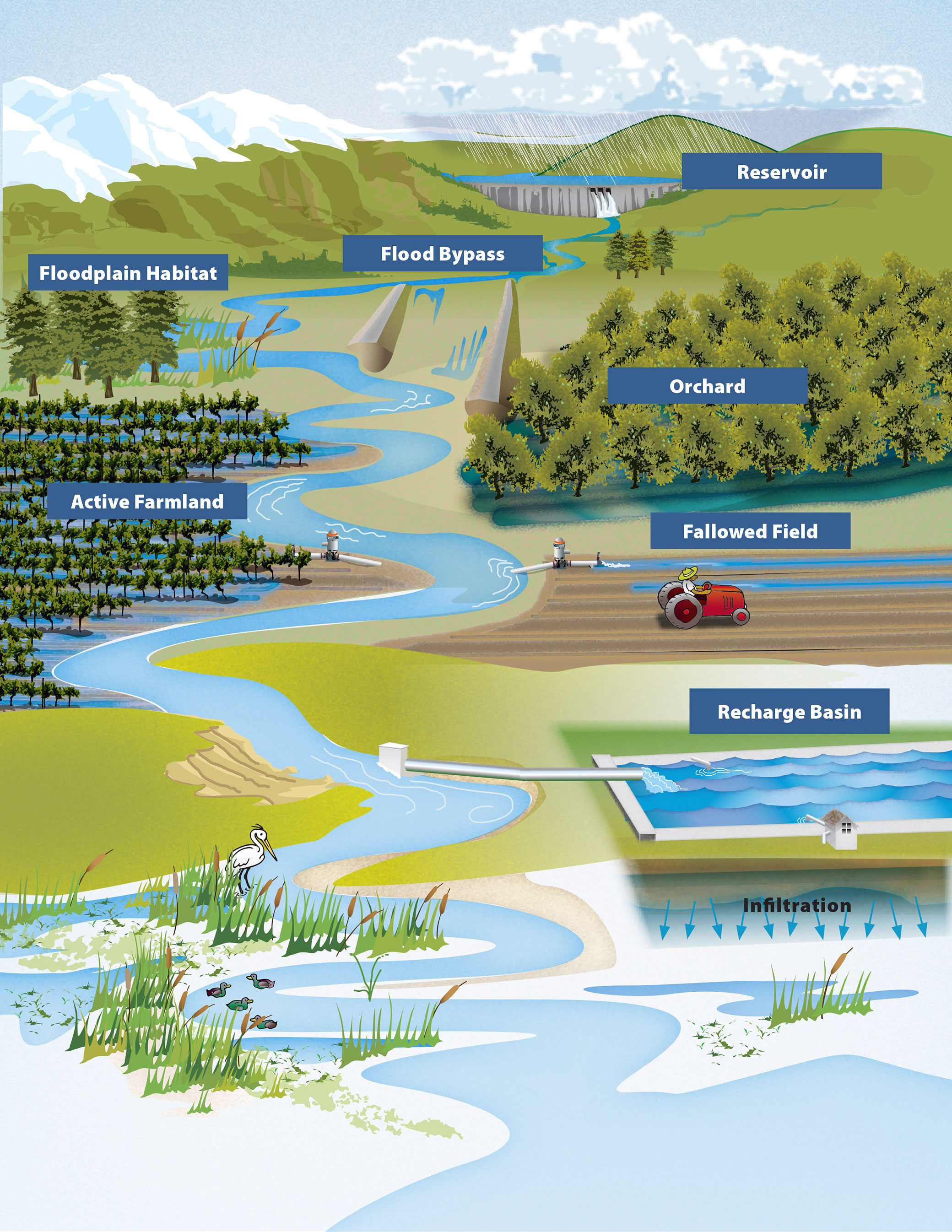
Flood-MAR is a water management strategy that redirects floodwater fromrainfall or snowmeltto agricultural lands, working landscapes, or managed natural lands including refuges, floodplains, and flood bypasses for groundwater recharge. Flood-MAR strategies can be implemented on a small-scale by individual landowners who divert floodwaterusing existing infrastructure or on a larger-scale through extensive detention/recharge areas and modernizing flood management infrastructure/operations.
Flood-MAR projects can provide broad benefits for Californians and the ecosystems of the state, including the following:water supply reliability, flood risk reduction,drought preparedness, aquifer replenishment, ecosystem enhancement, subsidence mitigation, water quality improvement, working landscapepreservation andstewardship,climate change adaptation, andrecreation and aesthetics.
As interest in Flood-MAR projects grows across the state, DWR is working with state, federal, Tribal, and local entities; academia; and landowners to build on existing knowledge, expand implementation, and strengthen Flood-MAR’s role in the state’s long-term water strategy.
Find answers to frequently asked questions about Flood-MAR in the FAQs.
DWR’s Watershed Studies explore two Flood-MAR strategies and examine how changing flood patterns, water supply, and ecosystem health can be jointly managed through coordinated recharge and reservoir operations. The Watershed Studies were conducted to see how they could help water managers reduce climate change risks and build resilience for communities, farms, and the environment.
Merced River Watershed Flood-MAR Reconnaissance Study
To better understand climate vulnerabilities and how to address them, the California Department of Water Resources (DWR) conducted a three-year Merced study in partnership with Merced Irrigation District (MID) as a proof of concept to explore the effectiveness of Flood-MAR to concurrently reduce flood risk, improve water supply, and enhance ecosystems in the Merced River watershed, a tributary to the San Joaquin River. The Merced study is an exploratory watershed-scale analysis to develop and test analytical methods and models, assess climate change vulnerability, and evaluate adaptation strategies meeting multiple benefits that achieve these shared objectives:
Following is the Merced River Watershed Flood-MAR Reconnaissance Study Report and supporting technical information records (TIR) that explain the development as well as the results of the study:
 TheFlood-MAR Research and Data Development Plan (R&DD Plan) was created by a team of subject matter experts across 13 research themes who identified the research, data, guidance, and tools necessary to support and expand the implementation Flood-MAR projects. There has been a lot of progress since the plan was developed, and an evaluation outlines the advances made on its 39 key actions while also pointing to dozens of resources created to support broader use of Flood-MAR.
Theme-specific Actions and Documentation are available by request to FloodMAR@water.ca.gov.
Coordinating Flood and Groundwater Management Brochure
Learn more about how Flood-MAR can reduce flood risk, boost groundwater recharge, and support climate adaptation by strengthening coordination between flood and groundwater management.
Explore how large-scale Flood-MAR implementation can help rehabilitate and modernize California’s water and flood infrastructure.
The following websites provide additional information and resources on the benefits and issues of using flood waters to recharge groundwater basins.
As California experiences more extreme swings between wet and dry periods, it is critical for the State to deploy innovative forecasting and water management strategies to adapt to our changing climate.
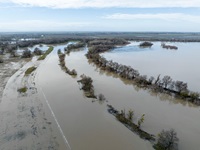
Much of California enjoyed a brief break from the succession of atmospheric river storms that have drenched and pummeled the state for the past two weeks. With six storms behind us and three more lined up between now and January 19, many people are asking whether and when the decision will be made to open the Sacramento Weir.
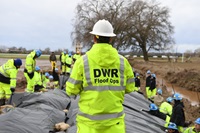
DWR continues to respond to the statewide impacts from a series of severe storms that have inundated the state since late December.
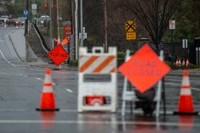
DWR urges Californians to stay safe and vigilant as we continue to experience the impacts from storms and flooding.
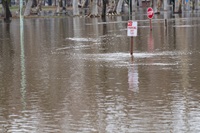
DWR is preparing for a series of storms in the next ten days that could potentially bring additional flooding to communities already inundated by recent downpours.
Lake Oroville Community Update for October 21, 2022

DWR is working to reduce flood risks for more than a half million people in the Sacramento region as part of the first multi-benefit flood management and habitat project under the Central Valley Flood Protection Plan.
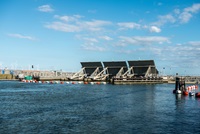
By experimenting with how salty ocean water mixes with fresh water within the Suisun Marsh, the Department of Water Resources (DWR) has found a way to improve habitat conditions for endangered delta smelt within the upper San Francisco Estuary.

Face coverings have become vital to our public health during the COVID-19 pandemic. When DWR employee Linda Slavik learned of the overwhelming need for face masks, she took it upon herself to make themed masks and donate them to those that needed them most.

Do you wish you could find hands-on, paid work experience while in school? DWR's Student Assistant Program offers on-the-job training to individuals enrolled in high school, college, or any recognized school of learning.