
Data Transparency is Key to California Achieving Groundwater Sustainability
The North San Joaquin Water Conservation District’s Lakso Recharge Basin in San Joaquin County helps facilitate year-round groundwater recharge and doubles as a habitat for various waterfowl. The 80-acre project was funded by DWR’s Flood Diversion and Recharge Enhancement Initiative to proactively prepare for future storm events and drought by diverting flood flows and replenishing local aquifers through groundwater recharge. Photo taken December 23, 2025.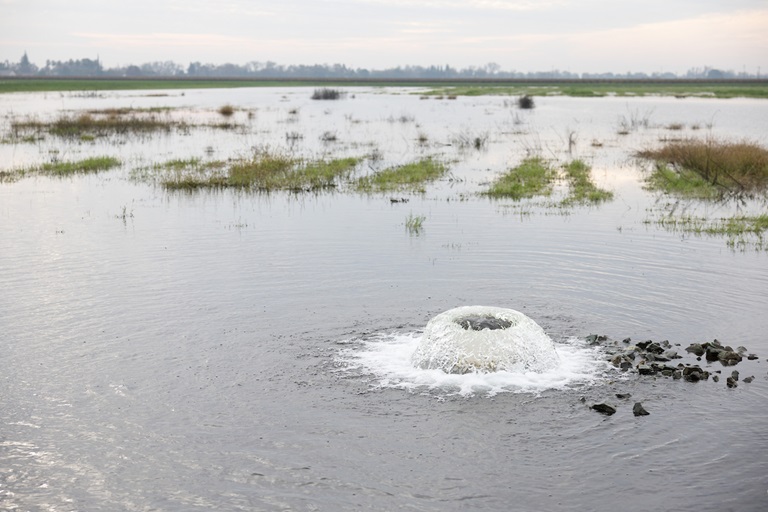
By Paul Gosselin, DWR Deputy Director for Sustainable Water Management
Beneath the feet of millions of Californians lies one of the most critical pieces of our state’s water supply – groundwater. This hidden resource provides about 40 percent of California’s total annual water supply and serves as an important buffer during dry periods, supplying up to 60 percent of the state’s water in drought years.
As California’s hydrology becomes more variable, long-term sustainability will require adaptive management, including improving recharge during high-flow periods, better coordinating surface water and groundwater use, managing demand, and consistently tracking progress. In a future increasingly defined by swings between intense wet and dry years, managing this largely unseen resource will require strong science, reliable data, enhanced monitoring and forecasting tools, and continued collaboration across local, regional, and state partners.
Data transparency is the key to sustainable groundwater management because of its ability to tell California’s groundwater story. From monitoring wells to aerial surveys to GPS monitoring stations tracking subsidence, state and local agencies are working hard to expand the state’s groundwater data network to help water managers make better-informed decisions.
Earlier this spring, the Department released California’s Groundwater: Bulletin 118 – Update 2025, the state’s official and most comprehensive report on groundwater monitoring, conditions, and management across California. The report builds upon the previous update in 2020 and contains critical information about the state’s groundwater supplies from 2020 to 2024, a period marked by record-setting dry and wet weather events and increasing ambient temperatures. Overall, the report shows considerable progress made by California and local agencies toward reaching the goals of groundwater sustainability outlined in the Sustainable Groundwater Management Act (SGMA).
Moving forward, Bulletin 118 will be released every 10 years. In between reports, local agencies, groundwater professionals, academia, and any other interested parties can find the most up-to-date information using two tools: California’s Groundwater Live website and California’s Groundwater Semi-Annual Update. Together, these resources, paired with DWR’s financial and technical assistance services, help local groundwater sustainability agencies monitor conditions in their region.
We are pleased to share the Spring 2026 edition of DWR’s Semi-Annual Groundwater Update, which includes information on statewide groundwater levels, groundwater storage, recharge, land subsidence, well infrastructure, and the status of California’s groundwater basins.
As local and state efforts bring us closer to achieving sustainability goals set by SGMA, California will continue to expand data collection to protect and manage this precious hidden resource and the communities, industries, and environments that rely on it.