
Little Fish, Big Decisions: How Science Guides Actions in the Delta
Delta smelt are raised at the UC Davis Fish Conservation and Culture Laboratory in Contra Costa County, California, to be released into the Sacramento-San Joaquin Delta to support the wild population. Photo taken January 8, 2025.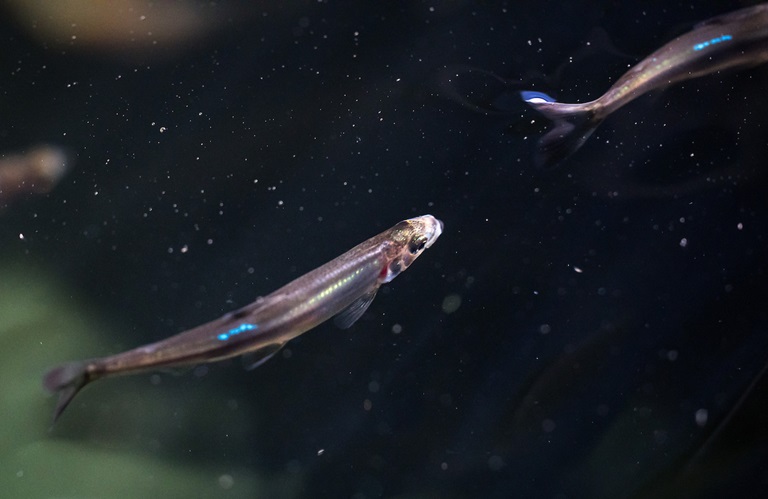
California’s water system is one of the most complex and important in the world. It delivers water to millions of people across the state and supports ecosystems that are vital to California’s environmental health. At the heart of this system is the Sacramento-San Joaquin Delta, a region where two rivers merge and water is pumped to communities across the state via California’s State Water Project (SWP) and the federally run Central Valley Project (CVP).
These systems don’t just serve people. They support native fish species – some whose survival depends on how, when and where water moves through the Delta.
The Delta is the central hub of California’s water supply. Water flows from the Sierra Nevada snowpack into the Delta before heading to cities and farms in the Bay Area, Central Valley and Southern California. At the same time, the Delta is home to native fish species including Delta smelt, longfin smelt and the endangered winter-run Chinook salmon.
These fish are sensitive to changes in water flow, temperature and salinity. Pumping water at certain times or under certain conditions can alter their habitat, making it more difficult for them to feed and grow before they migrate to the Pacific Ocean then return to rivers to reproduce. Because of this, state and federal laws require water managers to operate the system in ways that help protect these species.
Last year the Department of Water Resources (DWR), which operates the SWP, applied for and had approved changes to its Incidental Take Permit (ITP) from the California Department of Fish and Wildlife (CDFW). The ITP helps guide operations in the Delta while requiring actions to protect fish. That means adjusting SWP operations based on real-time conditions including current hydrology, snowpack, reservoir storage and fish monitoring data.
In dry years, operating decisions become even more challenging. Less water in the system makes trade-offs – like releasing additional freshwater flows through the Delta to help maintain suitable habitat conditions – unavoidable. During the spring, this may happen to help ensure the health of habitat for little fish as they grow. Additionally, changes in operations like reduced pumping can help reduce the likelihood of finding fish at export facilities. This is why the SWP is using science to guide decisions that balance both the importance of water supply and species protection.
When the SWP can operate with flexibility using best available science and adaptive management – meaning operations can adjust based on real-time data – it can more easily respond to changing conditions. Making big decisions based on science is essential to ensuring that California can meet needs in the moment without sacrificing the environment for future generations.