
Lake Oroville Update - February 20, 2026
An aerial view of a designated brood pond area at the Thermalito Afterbay. Water surrounds two small, vegetated islands. 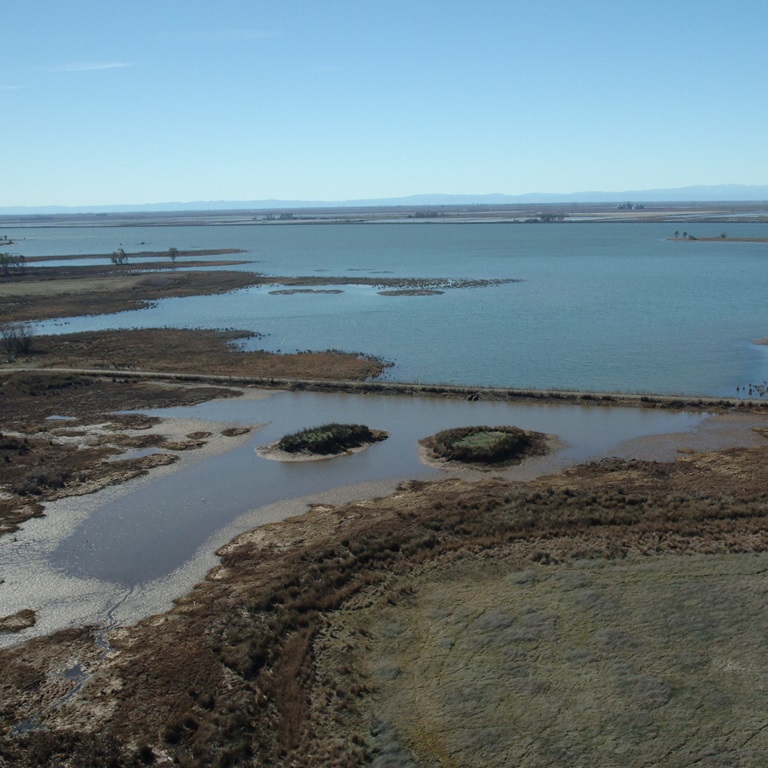
DWR Increasing Releases for Flood Protection
With recent rain and low-elevation snow in the Feather River watershed, the Department of Water Resources (DWR) is increasing water releases from Oroville Dam to maintain flood protection for downstream communities. Releases are being made through the Hyatt Powerplant for power generation and Oroville Dam’s main spillway. DWR continues to conserve as much water as possible while continuing to meet federal guidelines for downstream flood protection and state environmental regulations.
Between mid-September and June, DWR is required to operate Lake Oroville for flood control under federal Water Control Manual Guidelines set by the U.S. Army Corps of Engineers. These federal regulations establish a set storage space that is reserved to capture inflows from rain and future snowmelt, while protecting downstream communities from damaging flood events through coordinated releases. To maintain this storage space, DWR conducts flood protection releases from Lake Oroville. Some of the water released from Oroville for flood control is captured downstream for beneficial uses by local landowners, communities, and the State Water Project. Releases from Oroville Dam also support Feather River habitat for salmon, steelhead, sturgeon, and other river species.
DWR coordinates releases to the Feather River closely with the U.S. Army Corps of Engineers and other downstream water operators. DWR advises Feather River recreation users to remain alert as river flows are expected to be swift and cold and may change based on projected weather forecasts.
The information below reflects current reservoir level estimates. Forecasts can change quickly and may affect the estimates provided.
- Current Oroville Reservoir Level: 855 feet elevation
- Current Storage: 81 percent of capacity
- Total Releases to the Feather River: 10,000 cubic feet per second (cfs)
The Lake Oroville reservoir is the largest storage facility in the State Water Project, providing flood protection while supporting environmental and water delivery needs to 27 million Californians. DWR continues to monitor lake levels, weather forecasts, and mountain snow levels to optimize water storage while allowing for carryover storage into the following year.
Brood Ponds Support Native Wildlife
Within the Oroville-Thermalito Complex, DWR maintains several areas that preserve and enhance wildlife habitat. The Thermalito Afterbay includes 17 miles of shoreline and 4,300 surface acres of water, along with numerous brood ponds that provide prime habitat and breeding areas for waterfowl and giant garter snakes, a protected species. While water levels at the Afterbay may fluctuate based on agriculture and hydropower operations, DWR ensures brood pond habitats remain stable. A flap gate outlet system permits water to flow into brood pond areas, raising water levels while preventing water from being released and maintaining a stable elevation for waterfowl nests and giant garter snakes. These measures ensure these species continue to thrive, upholding DWR’s commitment to protect, restore, and enhance the natural and human environments.
Driftwood Abatement at Lake Oroville
During the typically wetter fall and winter months, DWR’s civil maintenance crews patrol the branches of Lake Oroville to capture floating woody debris before it reaches the main body of the lake. Higher inflows wash woody debris into the reservoir, which can impact water infrastructure and present a hazard to boaters. For the next few months, DWR crews will be collecting, containing, and pulling larger pieces of wood out of the lake and away from shoreline areas using boom lines.
DWR crews spent a significant amount of time collecting woody debris in Lake Oroville between 2023-2025 following heavy storms, with approximately 44,000 cubic yards of woody vegetation collected. Floating debris removal ensures continued infrastructure operations and the safety of the recreating public on Lake Oroville. However, boaters and other water recreationists should take precautions when operating watercraft on Lake Oroville and should remain alert for floating debris.
Golden Mussel Inspection Program
DWR has moved its invasive mussel inspection/decontamination facilities at the North Thermalito Forebay to the paved RV parking lot near the entrance. Watercraft owners should turn right once past the main entrance. Signage has been posted to help direct traffic. More details about DWR’s mussel inspection program are available at water.ca.gov/mussels.
Watercraft Inspection Location/Decontamination Services
North Thermalito Forebay at Garden Drive and HWY 70 in Oroville
Hours of operation: Daily from 8:30 a.m. to 4:30 p.m.
Starting March 8: Daily from 8:30 a.m. to 5:30 p.m.
Sealed Vessel Launching
Lake Oroville
Ramp hours: Daily from 7:30 a.m. to 6:30 p.m.
Starting March 8: Daily from 7:30 a.m. to 9 p.m.
- Spillway
Ramp hours: Monday-Thursday 7:30 a.m. to 6:30 p.m.; Friday-Sunday 7:30 a.m. to 8 p.m.
Starting March 8: Daily from 7:30 a.m. to 9 p.m.
- Bidwell Canyon
Ramp hours: Monday-Thursday 5 a.m. to 6:30 p.m.; Friday-Sunday 5 a.m. to 8 p.m.
Starting March 8: Daily from 5 a.m. to 9 p.m.
- Lime Saddle
Ramp hours: Daily from 5 a.m. to 6:30 p.m.
Starting March 8: Daily from 5 a.m. to 9 p.m.
- Loafer Creek/Loafer Point
Thermalito Afterbay
Ramp hours: Daily from 1.5 hours before sunrise to 1 hour after sunset
- Monument Hill
Thermalito Forebay
Ramp Hours: Daily from 8 a.m. to sunset
- North Forebay (Non-motorized vessels only)
Current Lake Operations
Lake Oroville is at 855 feet elevation and storage is approximately 2.77 million acre-feet (MAF), which is 81 percent of its total capacity and 128 percent of the historical average.
Feather River flows are at 650 cfs through the City of Oroville with releases from the Thermalito Afterbay River Outlet at 9,350 cfs for a total Feather River release of 10,000 cfs downstream. DWR continues to assess Feather River releases daily.
The public can track precipitation, snow, reservoir levels, and more at the California Data Exchange Center. The Lake Oroville gage station is identified as “ORO.”
All data as of 11:59 p.m. on 2/19/2026.